reining horse collapses in show ring

Reining Horse Collapses in Show Pen and Refuses to Get Up

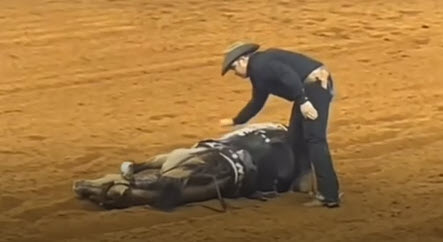
This Reining Horse collapses in front of the judges, and the crowd is cheering. Are they used to seeing this from show horses?

Is the trainer invested in the horse’s future or just focused on winning the Futurity?

At the National Reining Horse Association Futurity for three-year-old horses, the prize money is now in the millions. Winning a futurity is the key to a full barn full of horses in the following years, and joining an ‘elite’ group of people who have won the major prize.  Trainers invest two years in training, some an additional two years in raising the horse, in the pursuit of the money.

It comes down to one final run in front of the judges. They ask the horse to give its all and often push them harder than they have ever done before. The atmosphere is electric, and they can feel the excitement. But do they have the character to know when it’s too much for the horse?

When a reining horse collapses, it shows it has been pushed to far. It’s not just standing on its tail that knocked it over. It’s physically exhausted, and what would normally be a quick recovery from a loss of balance becomes a major issue. This horse was not down for seconds; it was staying down on the ground, and even with encouragement, did not show a desire to stand up again.

Reining horse people think a person giving the horse a pat means it was all good. The horse may have a different opinion.

The public and horsemen across many disciplines are shocked at what happened. The horse refused to get up and had given up.

Watch the video and form your own opinion – remember this horse is just 3yo !! Would you want your horse to end its campaign like this?

Aggressive Force Rollkur is a Cornerstone of Training

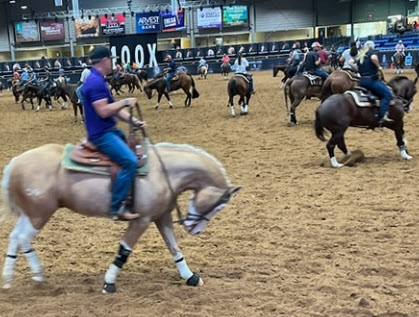
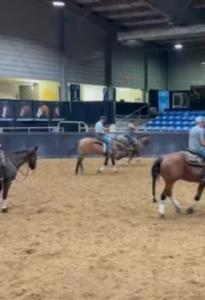
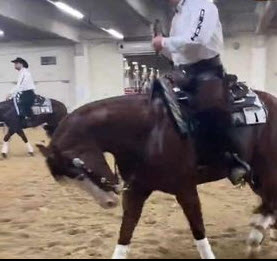
Rollkur is alive and well in the training practices of Reining Horses in 2023 – while the rest of the equine world are working to have it banned.

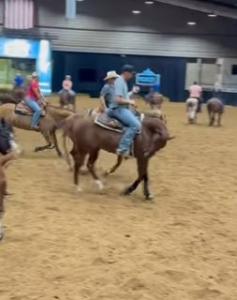
These photos are from 2023 100xReining Classic ($3m of prize money) in Tulsa OK, and Run for the Million 2023 in Las Vegas 2023.

Referred to as horse abuse by scientific studies, its rampant in the education of reining horses.

About Rollkur

Rollkur is an equestrian training method where a horse’s neck is forced into an extremely low, deep, and rounded position, with the head pulled back so the nose is tucked to the chest. Also known as hyperflexion, it is controversial because it is achieved through aggressive force and is considered harmful to the horse’s welfare. It can restrict the horse’s movement and airflow and cause musculoskeletal pain, stress, and potential injury. The International Federation for Equestrian Sports (FEI) banned aggressive rollkur in 2010 after a video showed a horse suffering physical distress during the practice.

What is rollkur?
  • Method: A training technique in which a horse’s head and neck are forced down and back, often behind the vertical and towards the chest, far beyond what is natural or comfortable.
  • Purpose (as claimed by proponents): Proponents claimed it could lead to a more “soft” and “collected” horse, with enhanced flexibility and tone.
  • How it’s done: The posture is achieved through aggressive use of the bit and reins, sometimes with auxiliary aids like draw reins, and is not considered a natural or easy exercise. 
Why is it controversial?
  • Harmful to horses: The practice is considered abusive because it can restrict the horse’s movement, block its airway, cause pain, and inflict psychological stress.
  • Physical effects: Prolonged hyperflexion can lead to strain on the horse’s musculoskeletal system.
  • Mental effects: Some view the forced submission as a form of psychological coercion, preventing the horse from expressing itself. 
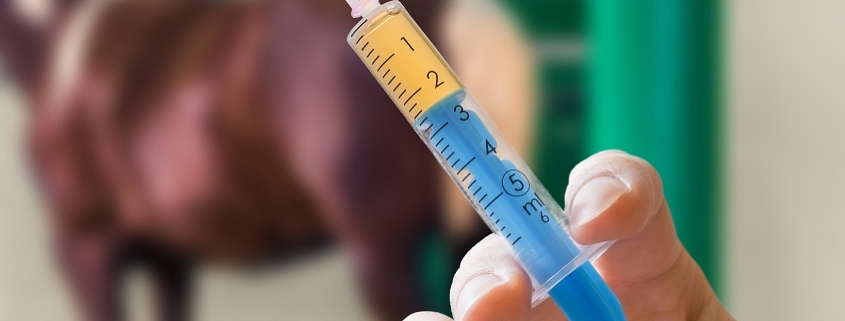
Injecting a reining horse

New NRHA President Sets New Path for Welfare

The new NRHA president of the NRHA, Mark Blake, has set a new path forward to address the issues of drug use in reining horse events. The change of one key person on the board brings hope for the horses. If the remaining board would do the sport the honor of resigning too, as Gary Carpenter former president did, the sport could remove its stained, even ugly, reputation and provide full and transparent management of a drug-free and abuse-free sport.

The letter below is very clear::

Dear NRHA Membership:

As I began my presidency, one of my top priorities was to be as transparent as possible with the membership and always keep an open dialogue.
With that being said, as we get closer to the implementation of our updated Animal Welfare & Medications policy this June, I wanted to ensure our members were aware of two developments that occurred after the policy’s August approval.
First, the American Association of Equine Practitioners (AAEP) sent a letter that was later publicly shared, expressing their concerns over the permittance of Romifidine. They have also since provided us with research to support their objections. You can read the letter.
Secondly, the US Equestrian Federation (USEF), whom we have shared a long-standing relationship with, formally notified us they could no longer partner with us to conduct our medications testing at NRHA-approved events due to our allowance of Romifidine in competition. You can read the letter here.
The significance of these decisions and communication pieces has weighed heavily on me, and I continue to take them very seriously. That is why, at our February meeting, I asked the NRHA Board of Directors to support my appointment of an Animal Welfare Task Force. This group will consist of a variety of members from different sectors of the industry, including at least one veterinarian, to focus solely on the safety and welfare of our horses.
I felt it was imperative we have a formal group to review not only what NRHA is doing but what we should be doing and to keep apprised of what is going on not only in the western performance industry but the entire equine industry. We need to work harder on being proactive so that we can be best prepared. This group will be responsible for helping to review statistics, rules, policies, and procedures and bring forward recommendations to the board as needed.
Additionally, the 2023 NRHA Member Survey is now available online as a platform to provide valuable feedback to our board. The responses will be carefully reviewed at our Strategic Planning Session held later this year and will help guide the future of the association. I strongly encourage you to take the time to respond thoughtfully, and I hope you tell your fellow reiners to do the same.
Our 2022 Medications Testing statistics are now available online. You can view them here, and as you can tell, we have provided additional detail as requested. Our board of directors will now regularly review testing statistics and the policy yearly.
Finally, you will soon begin seeing additional educational resources and communication from NRHA regarding our updated Animal Welfare & Medications policy. Please take the time to make sure you are up-to-date on the changes.
As always, if you have a question or a comment or would like to get more involved with NRHA, please pick up the phone and give me a call. I will always be available to speak with our members.
Together, I strongly believe NRHA will continue to be the premiere discipline in the western performance horse industry.
Sincerely yours,
Mark Blake
NRHA President
NRHA
3021 West Reno Ave
Oklahoma City OK 73107