
Aggressive Force Rollkur is a Cornerstone of Training
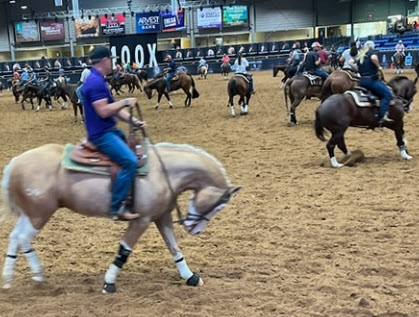
Rollkur is alive and well in the training practices of Reining Horses in 2023 – while the rest of the equine world are working to have it banned.
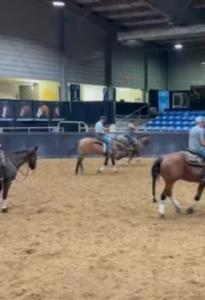
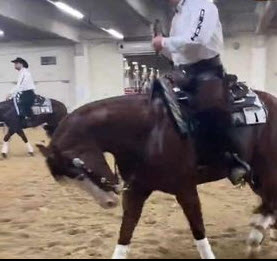
These photos are from 2023 100xReining Classic ($3m of prize money) in Tulsa OK, and Run for the Million 2023 in Las Vegas 2023.
Referred to as horse abuse by scientific studies, its rampant in the education of reining horses.






About Rollkur
Rollkur is an equestrian training method where a horse’s neck is forced into an extremely low, deep, and rounded position, with the head pulled back so the nose is tucked to the chest. Also known as hyperflexion, it is controversial because it is achieved through aggressive force and is considered harmful to the horse’s welfare. It can restrict the horse’s movement and airflow and cause musculoskeletal pain, stress, and potential injury. The International Federation for Equestrian Sports (FEI) banned aggressive rollkur in 2010 after a video showed a horse suffering physical distress during the practice.
- Method: A training technique in which a horse’s head and neck are forced down and back, often behind the vertical and towards the chest, far beyond what is natural or comfortable.
- Purpose (as claimed by proponents): Proponents claimed it could lead to a more “soft” and “collected” horse, with enhanced flexibility and tone.
- How it’s done: The posture is achieved through aggressive use of the bit and reins, sometimes with auxiliary aids like draw reins, and is not considered a natural or easy exercise.
- Harmful to horses: The practice is considered abusive because it can restrict the horse’s movement, block its airway, cause pain, and inflict psychological stress.
- Physical effects: Prolonged hyperflexion can lead to strain on the horse’s musculoskeletal system.
- Mental effects: Some view the forced submission as a form of psychological coercion, preventing the horse from expressing itself.


Leave a Reply
Want to join the discussion?Feel free to contribute!