
Scientific Evidence of Starting Horses Too Young

Are We Starting Horses Too Young? What the Science Actually Says

Equine PHD

Few topics ignite more debate in the horse world than the question of when a young horse should begin work. On one side, there’s concern that starting too early risks long-term soundness issues. On the other, some argue that thoughtful early training may actually support bone development. So instead of arguing from a point of instinct or tradition, I think it’s time to take a look at what the research actually says.

𝐆𝐫𝐨𝐰𝐭𝐡 𝐏𝐥𝐚𝐭𝐞 𝐂𝐥𝐨𝐬𝐮𝐫𝐞 𝐢𝐧 𝐇𝐨𝐫𝐬𝐞𝐬

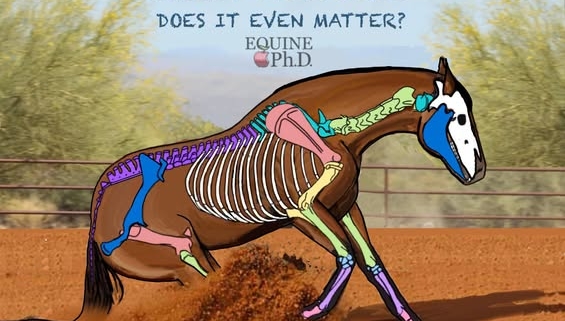
Let’s begin by addressing the color-coded diagram of an equine skeleton that frequently circulates social media. This diagram illustrates when growth plates close, which begins in the lowest parts of each limb and moves up the skeleton sequentially, ending at the spine. This diagram is popular as many use it to justify recommendations on when to start horses.

I decided to do some digging to track down the origin of this information, and my investigation led me to a table in a book that was published in 1975. This table cites literature that evaluated the closure of the epiphyseal growth plate in the appendicular skeleton (forelimbs and hindlimbs) through radiographs (Getty, 1975).

Since then, a review by Rogers et al. (2021) was published and concluded that the majority of growth for horses is completed by the time they are 2 years old. Additional research evaluating the vertebrae suggest that longitudinal growth of the spine ceases when wither height growth is complete (Butler et al., 1993). Based on these findings, the reviewers suggested that starting horses at the age of 2 is an acceptable practice that aligns with their developmental potential.

But that begs the question whether we should base recommendations on growth plate activity and active bone growth or on growth plate fusion and closure – as these are two very different metrics. This was detailed in a presentation by Collar et al. (2020) in which growth plate activity of lumbosacral vertebrae in Quarter Horses stopped when horses were 2 years old but growth plate closure or fusion was not complete until horses were between 2 and 8 years old.

𝐒𝐨 𝐰𝐡𝐢𝐜𝐡 𝐦𝐞𝐚𝐬𝐮𝐫𝐞𝐦𝐞𝐧𝐭𝐬 𝐬𝐡𝐨𝐮𝐥𝐝 𝐰𝐞 𝐮𝐬𝐞 𝐚𝐧𝐝 𝐰𝐡𝐚𝐭 𝐝𝐨𝐞𝐬 𝐭𝐡𝐞 𝐫𝐞𝐬𝐞𝐚𝐫𝐜𝐡 𝐬𝐚𝐲?

When evaluating race horses, Santschi et al. (2017) found that horses who began training at 2 years of age did not have a higher risk of injury during their racing careers. In fact, they tended to have more successful careers including more lifetime starts, wins, earnings, and years raced.

At first glance, it may seem counterintuitive. But young, growing bodies are built to adapt and specifically, bone development is supported by high cellular activity, an active periosteum, abundant blood supply, and open growth plates. As the body matures, it gradually shifts from a state of building to maintaining. Hormonal changes occur, bones become less adaptable, and osteoblasts (bone-building cells) struggle to keep pace with osteoclasts (cells that break bone down).

In other words – the window for skeletal adaptation is early and we accept this reality in humans all the time.

Young athletes routinely begin training long before their growth plates close. Elite gymnasts, swimmers, and figure skaters often compete internationally as teenagers. Many children enter organized sports as early as five or six years old despite the fact that human growth plates typically remain open until they are 14 to 17.

𝐒𝐨 𝐰𝐡𝐲 𝐝𝐨𝐞𝐬 𝐞𝐚𝐫𝐥𝐲 𝐰𝐨𝐫𝐤 𝐢𝐧 𝐡𝐨𝐫𝐬𝐞𝐬 𝐩𝐫𝐨𝐯𝐨𝐤𝐞 𝐬𝐮𝐜𝐡 𝐬𝐭𝐫𝐨𝐧𝐠 𝐫𝐞𝐬𝐢𝐬𝐭𝐚𝐧𝐜𝐞 𝐰𝐡𝐞𝐧 𝐢𝐭 𝐢𝐬 𝐚𝐜𝐜𝐞𝐩𝐭𝐚𝐛𝐥𝐞 𝐟𝐨𝐫 𝐡𝐮𝐦𝐚𝐧𝐬?

I believe the controversy is not tied to the work itself, but rather the conditions surrounding the work.

Youth athletes are typically offered diversity in the exercise they are allowed to complete, do not have to carry an external load, and can refuse participation or voice concerns. Youth sports are also framed as a crucial part of both physical development and confidence building.

In comparison, young horses are often subjected to repetitive, discipline-specific movement, asked to carry a rider, tend to be confined outside of training, and have no autonomy regarding their participation. Equine sports, specifically those centered around young horses, tend to be tied to economic benefits, tradition, and human timelines that do not always put the horse first.

I believe this is where we have significant room for improvement in the equine industry.

Another consideration is the amount of research we have to provide recommendations. There are a wide variety of breeds and disciplines in the equine industry and the current data is not representative of all demographics. Additionally, for many, performance outcomes aren’t the whole picture. And at the moment, equine research does not extend past a horse’s athletic career, so we may not currently grasp long-term implications of early work.

𝐁𝐮𝐭 𝐭𝐡𝐢𝐬 𝐢𝐬 𝐰𝐡𝐞𝐫𝐞 𝐰𝐞 𝐜𝐚𝐧 𝐮𝐬𝐞 𝐡𝐮𝐦𝐚𝐧 𝐫𝐞𝐬𝐞𝐚𝐫𝐜𝐡 𝐭𝐨 𝐨𝐟𝐟𝐞𝐫 𝐮𝐬 𝐚 𝐮𝐬𝐞𝐟𝐮𝐥 𝐩𝐞𝐫𝐬𝐩𝐞𝐜𝐭𝐢𝐯𝐞.

One of the clearest risks in youth athletics isn’t early movement, it’s repetition without variation.

While sports offer health benefits, single-sport specialization in children has been strongly linked to higher injury rates (Jayanthi et al., 2019). These risks are associated with children performing the same movements repetitively, which puts stress on the same joints and strains the same muscles.

Overuse injuries are especially likely during rapid growth phases, when muscle imbalances and coordination shifts are common (Arnold et al., 2017). This is because active growth is often tied to bone growth that outpaces muscles and tendon development. This imbalance can result in tight muscles, reduced flexibility, and structural instability, which temporarily declines coordination and balance and increases the risk of injury.

Youth athletes also face an increased risk of early-onset osteoarthritis which is linked to high-impact activities, repetitive movements, and severe joint injuries, all of which can accelerate cartilage degeneration (Saxon et al., 1999). However, osteoarthritis wasn’t identified until later in life due to a higher pain tolerance in youth and the time it takes for the condition to develop. I believe a long-term study evaluating this relationship in horses would be extremely insightful.

𝐒𝐨 𝐭𝐡𝐞 𝐢𝐬𝐬𝐮𝐞 𝐢𝐬𝐧’𝐭 𝐬𝐢𝐦𝐩𝐥𝐲 𝐰𝐡𝐞𝐭𝐡𝐞𝐫 𝐲𝐨𝐮𝐧𝐠 𝐛𝐨𝐝𝐢𝐞𝐬 𝐬𝐡𝐨𝐮𝐥𝐝 𝐰𝐨𝐫𝐤 𝐛𝐮𝐭 𝐡𝐨𝐰 𝐭𝐡𝐞𝐲 𝐰𝐨𝐫𝐤.

The key takeaway is that early training is not inherently harmful, rather the structure and approach to that training are what make the difference.

Variety is critical. Cross-training helps distribute stress across tissues and reduces the risk created by repetitive movement patterns. Youth athletes who were highly specialized in a single sport were almost twice as likely to sustain an overuse injury compared to someone competing in multiple sports (Bell et al., 2018). Trail rides, cavaletti work, or practicing a new discipline are all opportunities to not only improve musculoskeletal health but also support a horse’s mental wellbeing.

Short, intentional bouts of higher-intensity loading may stimulate bone adaptation more effectively than long periods of low-intensity exercise – as bone requires a dynamic strain above threshold to elicit bone formation. This was demonstrated by a study evaluating endurance horses completing ‘long, slow’ work, which found that horses in endurance training did not increase bone strength compared to horses allowed to freely exercise on pasture (Spooner et al., 2008).

Meanwhile, sprint exercises have been shown to result in greater bone strength (Logan et al., 2019), increased endosteal circumference (Firth et al., 2012), and greater bone mineral content (Hiney et al., 2004). However, balance is critical. When young horses were sprinted excessively, it had harmful impacts on joint health as the horse was responding to an unnatural amount of work (Van de Lest et al., 2002). While we still need to determine the appropriate level of high-impact work for horses, one study found that just one sprint a week could increase bone strength (Logan et al., 2019).

Load matters, too, and some weight-bearing can be beneficial. Research found that horses carrying 100 lbs while trotting had greater bone mineral deposition of the cannon bone compared to those who did not carry weight (Nielsen et al., 2002). However, it is important to note that the load these horses carried does not reflect most riding situations. In comparison, excessive loads could be detrimental to the horse and rider size is a real consideration when starting young horses.

Movement also builds coordination, balance, and proprioception. Expecting a horse to enter athletic work at maturity without foundational motor skills would be like asking a 22-year-old to learn and compete in a sport like soccer or gymnastics against someone who has trained since childhood. Early exposure to low-intensity technical challenges such as balance, body awareness, and varied terrain, can be incredibly valuable.

𝐀𝐧𝐝 𝐩𝐞𝐫𝐡𝐚𝐩𝐬 𝐦𝐨𝐬𝐭 𝐢𝐦𝐩𝐨𝐫𝐭𝐚𝐧𝐭𝐥𝐲: 𝐥𝐢𝐟𝐞𝐬𝐭𝐲𝐥𝐞 𝐦𝐚𝐭𝐭𝐞𝐫𝐬.

Work is only a small part of a horse’s day.

A two-year-old that is lightly trained but lives in turnout and is allowed to move freely, navigate space, and engage in natural behaviors, is experiencing something very different from one that lives in a stall for the majority of the day.

This is backed by research in which young horses pastured for at least 12 hours a day had greater bone mineralization and cannon bone circumference in comparison to their counterparts who lived in a stall (Bell et al., 2001). Since young horses often live in stalls during sale prep or once they enter training, they may be more likely to have bone loss or an increased risk of injuries. While that stall may be convenient for us, movement outside of structured exercise is critical for musculoskeletal development as well as mental wellbeing.

𝐀𝐫𝐞 𝐰𝐞 𝐚𝐬𝐤𝐢𝐧𝐠 𝐭𝐡𝐞 𝐫𝐢𝐠𝐡𝐭 𝐪𝐮𝐞𝐬𝐭𝐢𝐨𝐧?

Perhaps the real issue isn’t if young horses should work or even what age to start them, but whether the work we ask of them is age-appropriate.

Most horses are still in an active growth phase until around 2 years of age, and during this time, structured work should be limited while free movement through pasture turnout may be the most appropriate and beneficial form of loading.

Once rapid growth begins to slow, workload can be introduced thoughtfully and tailored to the individual, taking into account breed, maturity, and current developmental stage. At this point, how we develop the horse matters far more than simply when we begin.

𝐂𝐨𝐧𝐜𝐥𝐮𝐬𝐢𝐨𝐧

If I had to summarize some recommendations, they would include:

House your horse in a pasture or paddock over a stall.

Cross train to reduce the risk of overuse injuries.

Focus on low intensity, technical work at a young age to improve coordination and proprioception.

Utilize high-intensity work strategically to increase bone strength.

Minimize work during any growth spurts.

Make decisions for your specific horse based on individual growth and characteristics.

The bottom line is that early work itself isn’t the issue – what really matters is how young horses are trained, managed, and allowed to live.

If you want to read more on this topic, I encourage you to read an open access review (which means it is accessible to everyone!) by Logan and Nielsen (2021) which highlighted a lot of the research I covered in this post. I will include a link in the comments!

There’s always more to unpack, but hopefully this reframes the conversation in a way that allows us to use science to mold our decisions instead of tradition.

Cheers,

Dr. DeBoer

Reining Trainers Enigma’s Conclusion:

Starting 2yo is not the problem. The problems are:

– no pasture time (12 hours a day recommended)
– repetitious work is a negative (arena work)
– cross training required
– stalled horses are more likely to have bone loss or increased risk of injuries
– load carrying matters
Interestingly, the research shows that the scapula, spine, pelvis, and hip are not mature until after age 4. Most training barns are set to manage large numbers of horses on a small footprint of land. Stalled 24/7, drilled in the arena and asking for excessive stopping and spinning at the age of 2. Training barns and regimes need to change.


References:

Table 15-2; Getty R(ed): Sisson and Grossman’s The Anatomy of the Domestic Animals , ed 5. Philadelphia , WB Saunders Co , 1975, p 272.

Rogers CW, Gee EK, Dittmer KE. Growth and bone development in the horse: when is a horse skeletally mature?. Animals. 2021 Nov 29;11(12):3402.

Butler, J.A., Colles, C.M., Dyson, S., Kold, S., Poulos, P. Clinical Radiology of the Horse. 1993.

Collar, E. M., Russell, D. S., Huber, M. J., Duesterdieck-Zellmer, K. F., & Stover, S. M. (2020). Investigation into lumbosacral vertebral anatomy and growth plate closure in Quarter Horses [Video]. AAEP Proceedings. American Association of Equine Practitioners.

Santschi, E.M.; White, B.J.; Peterson, E.S.; Gotchey, M.H.; Morgan, J.M.; Leibsle, S.R. Forelimb Conformation, Sales Results, and Lifetime Racing Performance of 2-Year-Old Thoroughbred Racing Prospects Sold at Auction. J. Equine Vet. Sci. 2017, 53, 74–80.

Jayanthi NA, Post EG, Laury TC, Fabricant PD. Health consequences of youth sport specialization. Journal of athletic training. 2019 Oct 1;54(10):1040-9.

Arnold A, Thigpen CA, Beattie PF, Kissenberth MJ, Shanley E. Overuse physeal injuries in youth athletes: risk factors, prevention, and treatment strategies. Sports health. 2017 Mar;9(2):139-47.

Saxon L, Finch C, Bass S. Sports participation, sports injuries and osteoarthritis: implications for prevention. Sports medicine. 1999 Aug;28(2):123-35.

Bell DR, Post EG, Biese K, Bay C, Valovich McLeod T. Sport specialization and risk of overuse injuries: a systematic review with meta-analysis. Pediatrics. 2018 Sep 1;142(3):e20180657.

Spooner HS, Nielsen BD, Woodward AD, Rosenstein DS, Harris PA. Endurance training has little impact on mineral content of the third metacarpus in two-year-old Arabian horses. Journal of Equine Veterinary Science. 2008 Jun 1;28(6):359-62.

Logan, A., Nielsen, B., Robison, C., Manfredi, J., Schott, H.; Buskirk, D., Hiney, K. Calves, as a model for juvenile horses, need only one sprint per week to experience increased bone strength. J. Anim. Sci. 2019, 97, 3300–3312.

Firth, E.C., Rogers, C.W., Rene van Weeren, P., Barneveld, A., Wayne McIlwraith, C., Kawcak, C.E., Goodship, A.E., Smith, R.K.W. The Effect of Previous Conditioning Exercise on Diaphyseal and Metaphyseal Bone to Imposition and Withdrawal of Training in Young Thoroughbred Horses. Vet. J. 2012, 192, 34–40.

Hiney, K.M., Nielsen, B.D., Rosenstein, D. Short-Duration Exercise and Confinement Alters Bone Mineral Content and Shape in Weanling Horses. J. Anim. Sci. 2004, 82, 2313–2320.

Van de Lest, C., Brama, P.A.J., René Van Weeren, P. The Influence of Exercise on the Composition of Developing Equine Joints. Biorheology 2002, 39, 183–191.

Bell RA, Nielsen BD, Waite K, Rosenstein D, Orth M. Daily access to pasture turnout prevents loss of mineral in the third metacarpus of Arabian weanlings. Journal of animal science. 2001 May 1;79(5):1142-50.

Nielsen BD, O’Connor CI, Rosenstein DS, Schott HC, Clayton HM. Influence of trotting and supplemental weight on metacarpal bone development. Equine Veterinary Journal. 2002 Sep;34(S34):236-40.
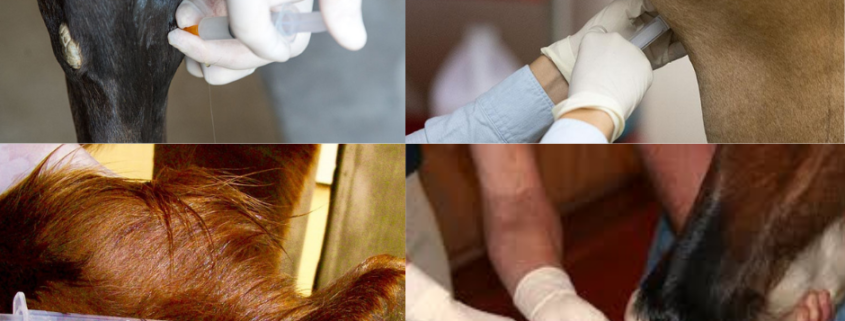
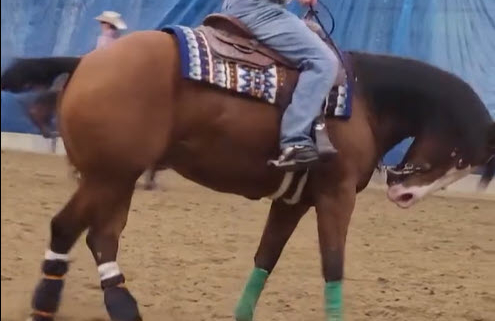
 

examples of equine drugs administration for reining horses

Why Do Reiners Have So Many Equine Drugs They Can Use?

If, as many within the reining community claim, horses are not drugged (or medicated) to perform, why is there such an extensive list of permitted substances?

The National Reining Horse Association (NRHA) has released its 2026 list of 185 permitted and conditionally permitted medications for use in reining competition.

Of those 185 substances, 82 fall into the categories of NSAIDs, bisphosphonates, opioids, or sedatives—many of which are classified as pain relievers and anti-inflammatories, including the controversial drug Sedivet.

Why are so many pain relievers and anti-inflammatories necessary if these horses are, as often stated, exceptionally well cared for and sound?

While many equine sports are working to reduce or eliminate medication use in competition, the permitted list in reining appears to be expanding.

The American Association of Equine Practitioners (AAEP) has formally raised concerns with the NRHA regarding medication policies. Despite this, and even with changes in leadership, Sedivet remains on the permitted list.

The full list is available below.

In the recent journalist-produced video One in Ten: The Scandal That Is Destroying Reining, testing results from major competitions indicate that a significant percentage of reining horses are competing with both approved and unapproved medications in their systems. This represents one of the highest medication ratios reported in equine sport globally.

The question of why some reining horses are shown while receiving medications such as NSAIDs, bisphosphonates, opioids, or sedatives is part of a broader conversation about performance demands, veterinary management, and welfare standards within the sport.

Reining is a highly athletic discipline requiring explosive acceleration, rapid deceleration (sliding stops), fast spins, and precise lead changes. These maneuvers place considerable mechanical stress on joints, hocks, stifles, and soft tissue structures. Nonsteroidal anti-inflammatory equine drugs (NSAIDs) are widely used in equine medicine to manage inflammation and musculoskeletal soreness.

Training intensity can be substantial, with repeated sliding stops and spins performed in preparation for competition. Some horses may receive therapeutic prescriptions to maintain comfort during demanding training schedules. The controversy arises when such medications are administered close to competition, as critics argue they may mask pain that would otherwise signal the need for rest.

Bisphosphonates, which affect bone metabolism, are used in horses diagnosed with certain bone-related conditions, particularly in the lower limbs. Their presence in performance settings has generated debate due to concerns about long-term bone health and whether their use allows horses to continue intense work despite underlying pathology.

Opioids and sedatives are even more controversial. Opioids are powerful analgesics, and sedatives can reduce anxiety or reactivity. In theory, these equine drugs may be administered for legitimate veterinary procedures or short-term therapeutic management. However, when permitted near competition, critics argue they could alter performance expression, mask lameness, or impact rider safety and judging fairness.

Opponents of current medication policies also question why horses would need pain-relieving equine drugs to compete when many other equine sports enforce a zero-tolerance standard for competition-day medications.

Regulatory bodies typically distinguish between therapeutic use, controlled medications with established withdrawal times, and prohibited substances. The ongoing debate in reining reflects a broader tension seen across high-performance equine sports: how to balance competitive success, veterinary intervention, transparency, and horse welfare.

2026 Summary Of Permitted and Conditionally Permitted Medications

Source: NRHA Website

Medication Category Definition Purpose
Dexamethasone Permitted Corticosteroid Reduces inflammation
Diclofenac Permitted NSAID Reduces pain and inflammation
Firocoxib Permitted NSAID Reduces pain and inflammation
Flunixin Meglumine Permitted NSAID Reduces pain and inflammation
Ketoprofen Permitted NSAID Reduces pain and inflammation
Phenylbutazone Permitted NSAID Reduces pain and inflammation
Alpha-Casozepine Permitted Sedative Calms anxiety; promotes calm behavior
Romifidine Permitted Sedative Provides sedation for procedures
Salicylic Acid Permitted Topical/NSAID-related Treats skin conditions; anti-inflammatory
Ceterizine Permitted Antihistamine Treats allergic symptoms
Ipratropium Permitted Bronchodilator Treats respiratory disease
Furosemide Permitted Diuretic Reduces fluid retention
Omeprazole Permitted Gastroprotectant Reduces gastric acid production
Altrenogest Permitted Hormone Synchronizes estrus; supports pregnancy
Levothyroxine Permitted Hormone Treats hypothyroidism
Apoquel Permitted Immunomodulator Treats allergic dermatitis
Methocarbamol Permitted Muscle relaxant Relieves muscle spasms
Dimethyl Sulphoxide (DMSO) Permitted Solvent Anti-inflammatory adjunct topical
Isoxsuprine Hydrochloride Permitted Vasodilator Improves blood flow
Acetaminophen Conditionally Permitted Analgesic Relieves pain and fever
Clanobutin Conditionally Permitted Analgesic Pain relief
Paracetamol (Acetaminophen) Conditionally Permitted Analgesic Relieves pain and fever
Ketamine Conditionally Permitted Anesthetic Induces anesthesia
Propofol Conditionally Permitted Anesthetic Induces anesthesia
Teiletamine Conditionally Permitted Anesthetic Induces anesthesia
Butylscopolamine Conditionally Permitted Antispasmodic Relieves smooth muscle spasms
Drotaverine Conditionally Permitted Antispasmodic Relieves smooth muscle spasms
N-butyl Scopolamine Conditionally Permitted Antispasmodic Relieves GI spasms
Prifinium Bromide Conditionally Permitted Antispasmodic Relieves GI spasms
Propantheline Conditionally Permitted Antispasmodic Reduces GI motility
Clodronate Conditionally Permitted Bisphosphonate Treats bone pain
Clodronate Disodium Conditionally Permitted Bisphosphonate Treats bone pain
Clodronic Acide Conditionally Permitted Bisphosphonate Treats bone disorders
Tildronate Conditionally Permitted Bisphosphonate Treats bone disorders
Tiludronate disodium Conditionally Permitted Bisphosphonate Treats bone pain
Tiludronic Acid Conditionally Permitted Bisphosphonate Treats bone disorders
Clonidine Conditionally Permitted Cardiac/Sedative Lowers blood pressure; sedation
Amcinonide Conditionally Permitted Corticosteroid Reduces skin inflammation
Beclomethasone Conditionally Permitted Corticosteroid Reduces lung inflammation
Budesonide Conditionally Permitted Corticosteroid Reduces inflammation in lungs
Flumetasone Conditionally Permitted Corticosteroid Reduces inflammation
Isoflupredone Conditionally Permitted Corticosteroid Reduces inflammation
Betamethasone Conditionally Permitted Corticosteroid Reduces inflammation
Ciclesonide Conditionally Permitted Corticosteroid Reduces airway inflammation
Clobetasol Conditionally Permitted Corticosteroid Treats skin inflammation
Cortisone Conditionally Permitted Corticosteroid Reduces inflammation
Fluticasone Conditionally Permitted Corticosteroid Reduces airway inflammation
Hydrocortisone Conditionally Permitted Corticosteroid Reduces inflammation
Methyloprednisolone Conditionally Permitted Corticosteroid Reduces inflammation
Methyloprednisolone Acetate Conditionally Permitted Corticosteroid Reduces inflammation
Prednisolone Conditionally Permitted Corticosteroid Reduces inflammation
Prednisone Conditionally Permitted Corticosteroid Reduces inflammation
Triamcinolone Conditionally Permitted Corticosteroid Reduces inflammation
Triamcinolone Acetonide Conditionally Permitted Corticosteroid Reduces inflammation
Triamcinolone Hexacetonide Conditionally Permitted Corticosteroid Reduces inflammation
Benzocaine Conditionally Permitted Local anesthetic Provides local pain relief
Lidocaine Conditionally Permitted Local anesthetic Provides local pain relief
Bupivacaine Conditionally Permitted Local Anesthetic Provides local anesthesia
Ethyl Aminobenzoate (benzaocaine) Conditionally Permitted Local Anesthetic Provides local anesthesia
Mepivacaine Conditionally Permitted Local Anesthetic Provides local anesthesia
Grapiprant Conditionally Permitted NSAID Treats pain and inflammation
Metamizole (Dipyrone) Conditionally Permitted NSAID Treats pain and spasms
Deracoxib Conditionally Permitted NSAID Reduces pain and inflammation
Dipyrone (metamizole) Conditionally Permitted NSAID Relieves pain and fever
Eltenac Conditionally Permitted NSAID Reduces inflammation
Felbinac Conditionally Permitted NSAID Reduces local inflammation
Ibuprofen Conditionally Permitted NSAID Reduces pain and inflammation
Indolmethacin Conditionally Permitted NSAID Reduces inflammation
Meclofenamic Conditionally Permitted NSAID Reduces inflammation
Meloxicam Conditionally Permitted NSAID Reduces pain and inflammation
Naproxen Conditionally Permitted NSAID Reduces inflammation
Oxyphenbutazone Conditionally Permitted NSAID Reduces inflammation
Piroxicam Conditionally Permitted NSAID Reduces inflammation
Suprofen Conditionally Permitted NSAID Reduces inflammation
Suxibuzone Conditionally Permitted NSAID Reduces inflammation
Thenoic acid Conditionally Permitted NSAID Reduces inflammation
Vedaprofen Conditionally Permitted NSAID Reduces inflammation
Methylsalicylic acide Conditionally Permitted NSAID-related Topical pain relief
Levomethadone Conditionally Permitted Opioid Pain relief
Opiates (class of drugs) Conditionally Permitted Opioid Pain relief
Buprenorphine Conditionally Permitted Opioid analgesic Pain relief
Midazolam Conditionally Permitted Sedative Calms anxiety and sedation
Oxazepam Conditionally Permitted Sedative Reduces anxiety; sedation
Valerenic acid Conditionally Permitted Sedative Mild sedative effects
Acepromazine Conditionally Permitted Sedative Provides sedation and tranquilization
Methoxypromazine Conditionally Permitted Sedative Sedation
Xylazine Conditionally Permitted Sedative Sedation and analgesia
Zolazepam Conditionally Permitted Sedative Sedation and muscle relaxation
Atimpamezole Conditionally Permitted Sedative reversal Reverses sedation
Dimethyl Sulphoxide Conditionally Permitted Topical Reduces inflammation
Pramoxine Conditionally Permitted Topical anesthetic Relieves itching
Trometamol Conditionally Permitted Alkalinizing agent Corrects acidosis
Cromolyn Conditionally Permitted Antiallergic Prevents allergic reactions
Scopolamine Conditionally Permitted Anticholinergic Sedation; anti-spasmodic
Carbamazepine Conditionally Permitted Anticonvulsant Controls seizures
Potassium Bromide Conditionally Permitted Anticonvulsant Controls seizures
Canagliflozin Conditionally Permitted Antidiabetic Lowers blood glucose
Ertugliflozin Conditionally Permitted Antidiabetic Lowers blood glucose
Metformin Conditionally Permitted Antidiabetic Lowers blood glucose
Velagliflozin Conditionally Permitted Antidiabetic Lowers blood glucose
Naloxone Conditionally Permitted Antidote Reverses opioid overdose
Physostigmine Conditionally Permitted Antidote Reverses anticholinergic toxicity
Brompheniramine Conditionally Permitted Antihistamine Treats allergies
Cromoglycate Conditionally Permitted Antihistamine Treats allergic reactions
Diphenhydramine Conditionally Permitted Antihistamine Treats allergic reactions
Fexofenadine Conditionally Permitted Antihistamine Treats allergies
Levocabastine Conditionally Permitted Antihistamine Treats allergic symptoms
Loratadine Conditionally Permitted Antihistamine Treats allergies
Chlorpheniramine Conditionally Permitted Antihistamine Treats allergies
Cyproheptadine Conditionally Permitted Antihistamine Stimulates appetite; treats allergies
Desmethylpyrilamine Conditionally Permitted Antihistamine Treats allergies
Doxylamine Conditionally Permitted Antihistamine Sedation; allergy relief
Hydroxyzine Conditionally Permitted Antihistamine Reduces anxiety; allergies
Pheniramine Conditionally Permitted Antihistamine Treats allergies
Pyrilamine (Mepyramine) Conditionally Permitted Antihistamine Treats allergies
Tripelennamine Conditionally Permitted Antihistamine Treats allergies
Pioglitazone Conditionally Permitted Anti-hyperglycaemic Treats metabolic syndrome
Levamisole Conditionally Permitted Anti-parasitic Treats parasitic infections
Clopidogrel Conditionally Permitted Antiplatelet Prevents blood clots
Pyrimethamine Conditionally Permitted Antiprotozoal Treats protozoal infections
Quinine Conditionally Permitted Antiprotozoal Treats protozoal infections
Albuterol (Salbutamol) Conditionally Permitted Bronchodilator Treats respiratory disease
Aminophylline Conditionally Permitted Bronchodilator Treats respiratory conditions
Clenbuterol Conditionally Permitted Bronchodilator Treats airway obstruction
Formoterol Conditionally Permitted Bronchodilator Treats respiratory disease
Vilanterol Conditionally Permitted Bronchodilator Treats respiratory disease
Arformoterol Conditionally Permitted Bronchodilator Bronchodilation
Fenoterol Conditionally Permitted Bronchodilator Bronchodilation
Indacaterol Conditionally Permitted Bronchodilator Bronchodilation
Olodaterol Conditionally Permitted Bronchodilator Bronchodilation
Pirbuterol Conditionally Permitted Bronchodilator Bronchodilation
Salbutamol Conditionally Permitted Bronchodilator Bronchodilation
Terbutaline Conditionally Permitted Bronchodilator Bronchodilation
Tiotropium Conditionally Permitted Bronchodilator Bronchodilation
Cannabidiol Conditionally Permitted Cannabinoid Reduces seizures; anti-inflammatory
Captolpril Conditionally Permitted Cardiac Lowers blood pressure
Diltiazem Conditionally Permitted Cardiac Treats arrhythmias
Dopamine Conditionally Permitted Cardiac Supports blood pressure
Norepinephrine Conditionally Permitted Cardiac Increases blood pressure
Prazosin Conditionally Permitted Cardiac Lowers blood pressure
Procainamide Conditionally Permitted Cardiac Treats cardiac arrhythmias
Quinidine Conditionally Permitted Cardiac Treats cardiac arrhythmias
Sotalol Conditionally Permitted Cardiac Treats arrhythmias
Dobutamine Conditionally Permitted Cardiac stimulant Treats heart failure
Timolol Conditionally Permitted Cardiac/Ophthalmic Reduces eye pressure
Cobalt Conditionally Permitted Chemical element Used in vitamin/mineral supplements
Neostigmine Conditionally Permitted Cholinergic Improves GI motility
Acetazolamide Conditionally Permitted Diuretic Treats glaucoma and edema
Chlorothiazide Conditionally Permitted Diuretic Reduces fluid retention
Chlorthiazide Conditionally Permitted Diuretic Reduces fluid retention
Hydrochlorothiazide Conditionally Permitted Diuretic Reduces fluid retention
Quinethazone Conditionally Permitted Diuretic Reduces fluid retention
Trichlormethiazide (formerly in Naquasome) Conditionally Permitted Diuretic Reduces fluid retention
Amantadine Conditionally Permitted Dopamine agonist Treats viral disease and pain
Magnesium Sulphate (injection) Conditionally Permitted Electrolyte Corrects deficiency; anticonvulsant
Pergoilide Mesylate Conditionally Permitted Endocrine Treats Cushing’s disease
Carbon Dioxide (CO2) Conditionally Permitted Gas agent Used in euthanasia or procedures
Loperamide Conditionally Permitted GI agent Controls diarrhea
Mesalamine (Mesalazine) Conditionally Permitted GI anti-inflammatory Treats colitis
Sulfasalazine Conditionally Permitted GI anti-inflammatory Treats colitis
Tranexamic Acide Conditionally Permitted Hematologic Prevents excessive bleeding
Pitcher Plant Extract Conditionally Permitted Herbal Traditional analgesic use
Oxytocin Conditionally Permitted Hormone Induces labor and uterine contractions
Adrenocorticotrphic hormone Conditionally Permitted Hormone Stimulates cortisol production
Estrone Conditionally Permitted Hormone Reproductive hormone support
Amiodarone Conditionally Permitted Immunosuppressant Suppresses immune response
Azathioprine Conditionally Permitted Immunosuppressant Suppresses immune response
Dichlroacetate Conditionally Permitted Metabolic agent Alters cellular metabolism
Ambroxol Conditionally Permitted Mucolytic Treats respiratory mucus buildup
Bromhezine Conditionally Permitted Mucolytic Breaks down respiratory mucus
Dembrexine Conditionally Permitted Mucolytic Breaks down mucus
Dantrolene Conditionally Permitted Muscle relaxant Treats muscle rigidity and spasms
Pregabalin Conditionally Permitted Neurologic Controls nerve pain
Brinzolamide Conditionally Permitted Ophthalmic Reduces intraocular pressure
Dorzolamide Conditionally Permitted Ophthalmic Reduces eye pressure
Tropicamide Conditionally Permitted Ophthalmic Dilates pupil
Metoclopramide Conditionally Permitted Prokinetic agent Stimulates gastrointestinal motility
Yohimbine Conditionally Permitted Reversal agent Reverses sedation
Ethanol Conditionally Permitted Solvent Disinfectant or solvent
Aminorex Conditionally Permitted Stimulant Appetite suppressant; stimulant
Hordenine Conditionally Permitted Stimulant Central nervous stimulation
Paraxanthine Conditionally Permitted Stimulant Central nervous stimulant
Palmitoylethanolamid (PEA) Conditionally Permitted Supplement Anti-inflammatory effects
Calcium Dobesilate Conditionally Permitted Vascular agent Improves microcirculation
Pentoxifylline Conditionally Permitted Vascular agent Improves blood flow


© 2026 Reining Trainers Enigma