Explore key welfare issues in reining horses, including training stress, physical strain, drug use concerns, and industry calls for more ethical horsemanship.
With an ongoing acknowledged poor record of performance by the Boards of Directors and Executive Committees placing horse’s welfare at risk and enabling an unfair competition landscape, immediate changes are required to who manages the drug rules and penalties.
The Final Straw: With the board of directors and executive committee (BoDEC) approving the continued off-label use of Sedivet on horses on the premise of tougher penalties, we look closer at what is really going on. The membership and public are outraged.
On close review of the rules and policies, it becomes very clear that most likely the new penalties will have little to no effect on those horses testing positive and will continue as business as usual. Read on to find out why that is the most likely outcome and the repercussion on the BoDEC.
Table of Contents
Rumours of Years of Drugging Confirmed
Horses returning positive tests for prohibited substances retain titles and prize money
Penalties Are a False Positive
Why the NRHA Animal Welfare and Medications Policy Will Continue to Fail
Is the Revised Policy Flawed – you be the judge on the fine print?
Is the BoDEC meeting its fiduciary responsibility?
Rumours of Years of Drugging Confirmed
Reining is an industry with many rumours constantly swirling around it for years, of excessive drugging of horses to win. The President has now openly confirmed that drugging has been a problem for years and remains a problem.
The President, Rick Clark, released an open letter to members attempting to explain their decision.
In a surprise admission, he stated, ‘we did not have the support to go to no allowance for Romifidine (Sedivet) at this time. It is as simple as that.” So Clark publicly admits horses are being sedated to be shown – so much for their mantra of willing guided.
Horses returning positive tests for prohibited substances retain titles and prize money
Clark further admits, “If a horse tested positive, their name was never publicized, and they got to keep their title, purse money, and prizes. So they essentially got away with a slap on the wrist, and no one would know.”
On review of the rule books of the past few years, the option to take action was at all times available by the medications hearing committee, but Clark’s statement demonstrates they elected not to take action as set out in clause (0). E. Animal Welfare and Medications Provisions Applicable to all NRHA Events.
(o) The owner or owners of a horse found to contain a forbidden substance or any metabolite or analogue thereof may be required to forfeit all prize money, sweepstakes, added money and any trophies, ribbons and “points” won at said event by said horse and the same will be redistributed accordingly.
The released former policy in the open letter clearly states in all areas ‘pending hearing committee review’.
Penalties Are a False Positive
Further in the rule books, there are a number of clauses concerning the management of horses testing positive. The penalties are at the discretion of the medications hearing committee. Section 1I. 8 and E. Animal Welfare and Medications Provisions Applicable to all NRHA Events. (N) (O) (P)
(p) Said person responsible may be fined and may be suspended from all participation in NRHA approved events as outlined in the Animal Welfare and Medications Policies
Section 1I, 11 (b) and (f)
(f) When a member is disciplined or sanctioned, the Hearing Body’s findings and determination will be presented to the Board and the Board may cause information regarding the discipline or sanction to be published on an appropriate disciplinary list.
Whether the penalty was $250 or $250,000 makes no difference, as the most fundamental step of publishing their name on the disciplinary list was not taken. Publishing positive drug tests for banned substances is often thought of as the greatest punishment, more than money and suspensions. Therefore, to be a known drug user to compete and have titles removed is a punishment and would be fair competition; an expectation of the membership.
The penalties are not the issue – the process of managing rule breaches and who is involved is the problem.
Is the Revised Policy Flawed – you be the judge on the fine print?
The NRHA Board of Directors approves the members of the Medications Hearing Panel and can remove members of the panel.
[the panel] shall have the discretion to (i) affirm the penalties, (ii) modify the penalties, or (iii) revoke the penalties.
[if there is an appeal], the Executive Committee have the right to (i) affirm the penalties, (ii) modify the penalties, or (iii) revoke the penalties. The Executive Committee’s decision is final.
The Board of Directors and Executive Committee are ultimately remaining as the management of the welfare program. This same process has existed since 2015 and has failed the horses.
ITS TIME TO TAKE THE MANAGEMENT OF DRUGS AND PENALTIES AWAY FROM THE NRHA
Is the BoDEC meeting its fiduciary responsibility?
The current and past BoDEC are responsible for protecting the horses’ welfare and providing a platform for fair and honest competition.
However, Clark’s letter of August 2022 has outlined that this was not the case, even in the light of hard evidence of positive drug tests. In providing his factual account and attempts to change rules he says “hopefully never find ourselves in such a dire situation again“.
Notably, Clark advises the changes will be taken in baby steps and provides no timeline for resolution for what is the most heinous experience for horses and matters of Animal Welfare in an equestrian association. This is unacceptable.
The members of NRHA, and the general public, expect more than they have experienced to date. Members are against drugs, particularly Sedivet, on mass by the commentary in private reining groups. Questions over the fees paid for drug testing and the validity of that spending are also high on the member’s agendas. It would be fair to say, the board does not represent the sentiment of a large proportion of the membership based on the online surveys in those groups
The thoroughbred industry battled with self-regulation for many years, and it is now law that HISA manage their medications and rulings. An independent body was created to ensure the welfare of horses and clean competition.
The NRHA cannot be trusted to manage the rules and penalties based on past performance, and the fact that 67%+ of the current board voted to retain an off-label drug for use by competitors raises alarm bells for many members and the broader public.
The members need to take action to change the rules or be seen as complicit in supporting what can only be described as a dirty sport.
https://reiningtrainers.com/wp-content/uploads/2022/09/Collapsed2.jpg404589Animal Welfarehttp://reiningtrainers.com/wp-content/uploads/2016/06/RT-LOGO2sml-300x174.pngAnimal Welfare2022-09-08 00:12:272025-11-04 22:52:18Remove NRHA From Management of Drugs and Penalties
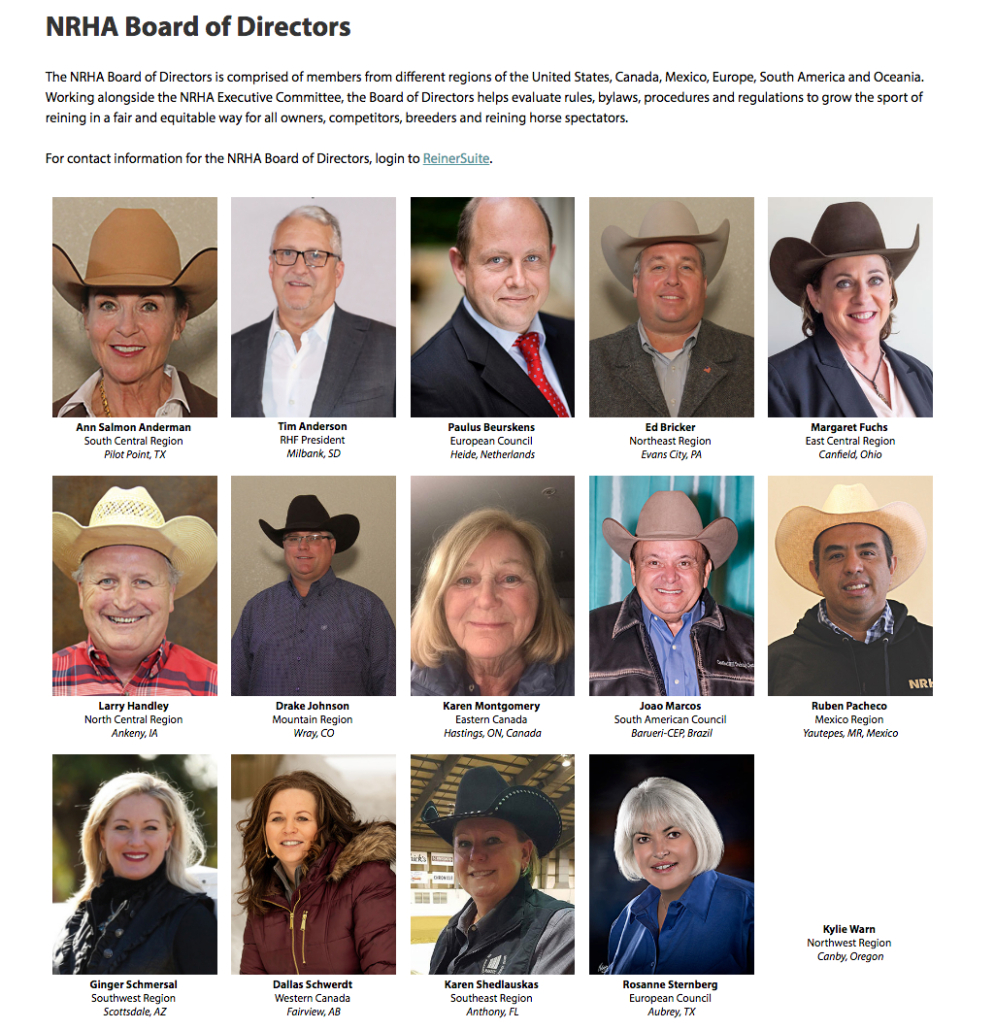
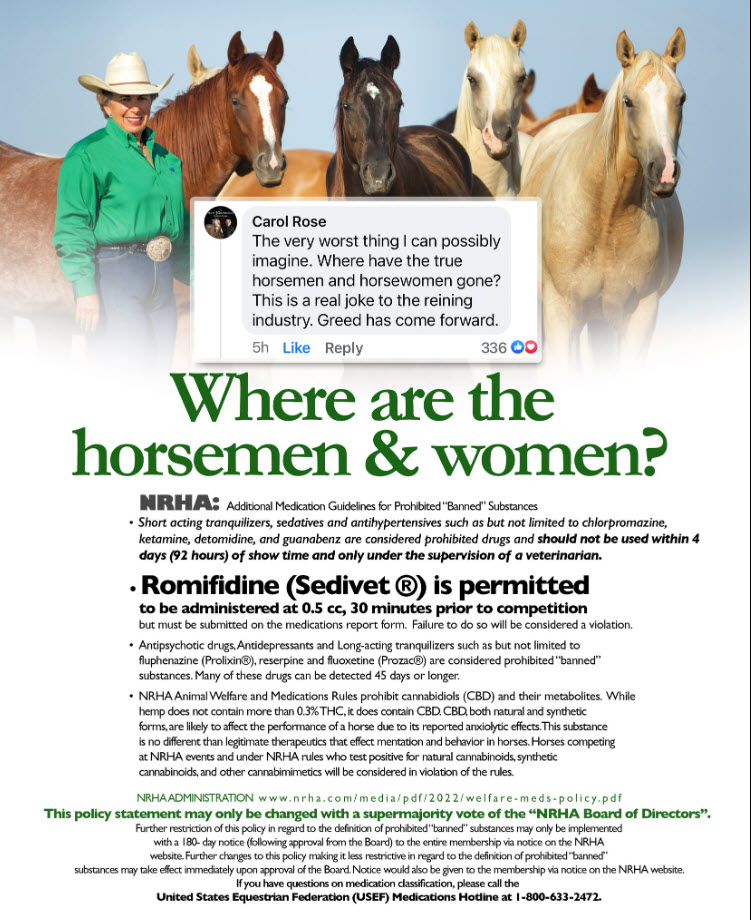
The equine world is in shock at the release of the new NRHA (National Reining Horse Association) drug rules published in their rule book in August 2022, allowing administrating of Sedivet 30 minutes prior to competition.
A time when horses in being ridden in what is referred to as the ‘warm-up’ pen. Warming up consists of continual loping, sliding, fencing (running horse at walls) spinning, backing and when the animal does not respond as desired by the rider, hauling on horses heads, spurring, sawing mouths and other ‘training’ techniques adopted by reining trainers and competitors.
Who Passed the Rule?
6 Time Hall of Fame Western Horsewoman Carol Rose says it is the very worst thing she could ever imagine happen.
For over 70 years I have been involved with AMERICAN QUARTER HORSES. As a breeder, as an owner, as a rider and as a lifelong supporter and member of NRHA, NRCHA, NCHA & AQHA. I have been inducted into 6 HALL of FAMES. My voice and experience should count and our horses need a voice too. I’ve bred over 1,200 registered AQHA Performance Horses that have won in every performance arena. Let’s do better for our horses NRHA!
Stand with Carol Rose to get this policy changed by following her FaceBook Page updates
Notably: This policy statement may only be changed with a supermajority vote of the “NRHA Board of Directors”.
What is Sedivet approved for use as:
The use of this drug is not approved for competition or riding purposes.
A disgraceful day for the welfare and respect of horses.
https://reiningtrainers.com/wp-content/uploads/2022/08/Sedivet-bottle.jpg417543Animal Welfarehttp://reiningtrainers.com/wp-content/uploads/2016/06/RT-LOGO2sml-300x174.pngAnimal Welfare2022-08-25 20:01:352025-11-11 23:48:58Famous Western Horsewoman Says Sedivet Rule is the Worst Thing You Could Imagine
A well-known equine veterinarian has written to the NRHA for intervention authority where animal welfare concerns are seen in the show pen. In an openly published letter the vet wants rule changes for the requirement of veterinarians on site to conduct examinations where concerns are seen in relation to animal welfare such as reining horses shown drugged, and other welfare violations following the observation of the distressed horse competing recently at a major show. Scroll down to read the letter.
With prize pools in the hundreds of thousands of dollars, the questions need to be asked:
Should Welfare and Drugging Rules of Western Events be managed by an independent body to ensure the highest standards are upheld in the interest of the horses. An example is the racing industry with the establishment of the HSIA
Does the board of directors of NRHA have a conflict of interest in managing and enforcing welfare and drug rules when they are involved in the breeding, training and showing of horses?
Self-regulation is not working for the horses.
Watch the video of the incident that has raised alarms across the world. Scroll down further to read the letter.
The publicly published letter was written to the NRHA on February 10th, 2022.
https://reiningtrainers.com/wp-content/uploads/2022/07/reining-horse-shown-drugged.jpg497928Animal Welfarehttp://reiningtrainers.com/wp-content/uploads/2016/06/RT-LOGO2sml-300x174.pngAnimal Welfare2022-07-13 19:13:162022-07-14 18:10:50Equine Veterinarian Calls For Intervention Into Reining Horses Shown Drugged
A decade on and no real changes in drugging horses regulation: the western industries are worse now.
Reprinted from Barrel Horse News in November, 2012.
Some horses are bred to run long distances fast; some bloodlines are famous for the inherent burst of quick speed they pass on. Some horses are bred for their ability to bury their haunches in the ground and turn. Some are bred for their fluid movements. In an industry that has grown more specialized than ever before, one thing remains true of all horses — performance horses included, and that is all members of the equine species are in some way shape or form are born to run.
Ancient survival instinct drives them to move faster in response to fear and anxiety, and even activities that they enjoy can trigger the instinctive flight response.
The task of horsemen and women is to take these specially bred horses and train them to perform at their utmost abilities without pushing them beyond their mental and physical limits. Perhaps the late, great horseman and reined cowhorse legend Greg Ward summed up training great horses the best when he said, “You know how they say, ‘Genius borders on insanity?’ Well, that’s kind of where I put them, right there on the edge.”
To the edge A dirty little secret in today’s performance horse industry, both Western and English, is the uncontrolled use of psychotropic drugs—sedatives and tranquilizers—that allow competitors to hold their horses at the edge without sending them over. Drugging horses is a culture within western sports.
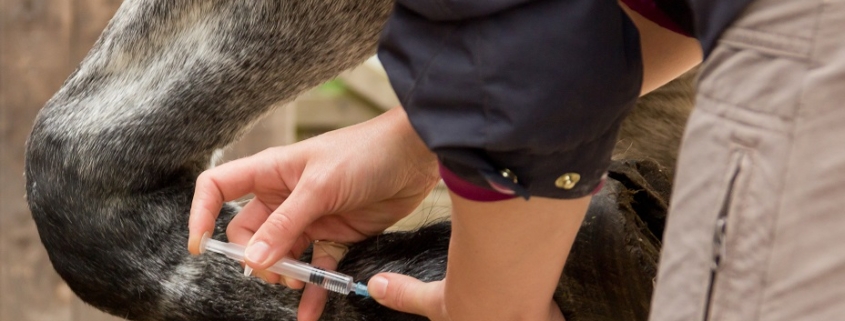
Most of the behavior-altering drugs used today in the horse industry came from human medicine. Acepromazine, chlorpromazine, fluphenazine and reserpine are antipsychotic drugs used to treat mental illnesses such as schizophrenia and bipolar disorder. Guanabenz is an antihypertensive used to control blood pressure.
In the barrel racing industry, these “calming agents” are generally used to take the edge off excitable and overly anxious horses to improve their focus and manageability, thus their performance. While some barrel racers use psychotropic drugs temporarily to help horses through stressful situations — like experiencing fireworks and Ferris wheels at rodeos to rehabilitating the minds of “blown-up” performers. Then, there are horses that never compete without some sort of chemical assistance.
While considered unethical by some, no rules to prevent their use currently exist in the barrel racing industry. The fractured nature of the governance of the industry has left it without a clear-cut leader or financial backing to research, establish and administer such policies.
Here, with a little help from world-renowned veterinary pharmacologist and toxicologist Dr. Thomas Tobin of the Gluck Equine Research Center at the University of Kentucky in Lexington, we take a look at the most commonly used behavior-modifying drugs. Tobin, author of the definitive work Drugs and the Performance Horse, is responsible for the development of many of the drug tests used today by the Thoroughbred racing industry.
The phenothiazines tranquilizers Acepromazine (“Ace”), chlorpromazine and fluphenazine are known as phenothiazine-type tranquilizers. Although they don’t contain phenothiazine, these drugs are classified as such because of their related molecular structure. Acepromazine is the most commonly used phenothiazine tranquilizer in the horse industry.
Actual Phenothiazine is an insecticide introduced to the United States in 1935 by DuPont In the 1940s, it was used as one of the first deworming drenches for sheep.
Phenothiazine tranquilizers act as potent adrenergic blocking agents, meaning they block the action of adrenaline, the so-called “flight or fight” hormone.
Ace is the most commonly used phenothiazine tranquilizer used in the horse industry. It’s been used to produce short-acting sedation for more than 40 years. Because it lowers a horse’s blood pressure, ace has also been used as a vasodilator in the treatment of laminitis and, reportedly, in some cases as a preventative treatment against Exercise-Induced Pulmonary Hemorrhage (EIPH or “bleeding”). Its sedative properties that facilitate muscle relaxation have led to it being used to treat exertional rhabdomyolysis, or “tying up,” as well as some episodes of colic.
An FDA-approved drug, Ace is not without its problems. It’s known to cause the penile retractor muscle to relax thus causing penile prolapse. While handy for sheath cleaning, in rare cases, speculated to be less than 1 in 10,000 cases, geldings and stallions develop paraphimosis, the inability to retract their penis into the sheath. Veterinarians have also speculated that the presence of circulating testosterone at the time of ace administration may increase the risk of paraphimosis for breeding stallions. In severe cases, penile paralysis may necessitate the amputation of the organ.
At the 2009 American Association of Equine Practitioners convention, Ann Wagner, DVM, MS, Diplomate of the American College of Veterinary Anesthesiologist and American College of Veterinary Practitioners, made the case against the use of Ace in colts and stallions after observing three cases of paraphimosis, or persistent penile prolapsed. Two of cases resulted in amputation of the penis, despite the fact that low doses of the drug were administered.
Given the devastating consequences for breeding stallions, Wagner recommended using alternative sedatives and tranquilizers that use some other mechanism of action rather than an adrenergic-blocking phenothiazine tranquilizer.
Longer acting than Ace, chlorpromazine is another phenothiazine tranquilizer that has also been used as a calming agent in performance horses. But it too has the same potential side effect when administered at large doses. Unfortunately, what exactly constitutes a large dose is highly variable and often horse and use dependent.
First used in 1950, chlorpromazine was the prototype for the phenothiazine class of drugs. Developed in France as a surgical pre-anesthetic, doctors discovered patients administered chlorpromazine reported feeling calm and relaxed while they were coming out of anesthesia. This development changed human psychiatric therapy. Known as the “chemical lobotomy,” chlorpromazine is considered one of the greatest advancements in human psychiatric care.
Chlorpromazine’s veterinary use is largely limited to small animal medicine. It’s commonly used to control vomiting in cats and dogs and is sometimes used as a sedative in cattle, swine, sheep and goats.
“Chlorpromazine is not FDA approved for use in the horse and there are no FDA approved veterinary formulations,” says Tobin. In Drugs and the Performance Horse, Tobin notes a study conducted by N.N. Booth, entitled “Psychotrophic drugs in veterinary medicine,” that detailed the undesirable side effects of chlorpromazine use in horses.
“According to Booth,” Tobin states, “after a few minutes of initial sedation following administration of the drug, the animal may become unsteady, sink backward on its hocks, and lunge forward in an uncoordinated manner. The horse may stumble and fall but then will stand up with continued lunging and rearing. This violent reaction reportedly alternates with periods of sedation.”
Anecdotal evidence suggests that horse owners who have used low doses of chlorpromazine to take the edge of nervous horses have also experienced such extremes.
Both Ace and chlorpromazine are relatively short acting with their pharmacological effect after a therapeutic dose ending within a number of hours.
“The advantage with a short-acting medication is that if you don’t like the response, you just wait,” says Tobin. “You either try a different dose next time, or you don’t.”
That isn’t the case with fluphenazine. A chemical cousin to ace and chlorpromazine, fluphenazine has some particularly nefarious side effects. A much more potent drug, approximately 50 to 70 times more potent than chlorpromazine, fluphenazine is available as a long-acting preparation that can be effective for several weeks, and if a horse is overly sensitive to it or is inappropriately dosed, it can be problematic.
A pharmacological cousin to acepromazine and chlorpromazine, fluphenazine is used in human medicine to treat schizophrenia and bipolar disorders. The long-acting form of the drug can be used to “take the edge off” a horse for several weeks, but the side effects can be particularly nasty.
In humans, fluphenazine is used to treat schizophrenia and acute bipolar disorders. In veterinary medicine, it’s used for horses stall-bound due to injury and to take the edge off nervous horses. In some instances, it’s recommended for extremely excitable horses with chronic tying-up disorders.
The biggest drawbacks to fluphenazine are the extra-pyramidal effects, which refers to the parts of the brain that are affected by the drug. Extra-pyramidal effects leave the horse in a manic, excitatory state, where they are essentially uncontrollable. Horses suffering from fluphenazine toxicity also exhibit Parkinsonism — involuntary muscle moments, tremors, restlessness and agitation.
While these adverse side effects are typically reported in horses that have received an overdose of fluphenazine, either at initial administration or following repeated dosing intervals, they can occur in horses that were given the same dose safely in the past. It’s highly dose, and horse, dependent.
Reserpine Reserpine is one of the world’s oldest tranquilizers. Made from the climbing vine Rauwolfiaserpentina native to India, it was known in ancient Hindu writings as the “insanity herb” and was used to treat high blood pressure, insomnia, and of course, insanity. Its ability to lower blood pressure made it valuable as a treatment for snakebites, and a particularly handy drug in a land populated by some of the world’s most deadly vipers. Mahatma Gandhi was said to have used reserpine as a tranquilizer, and ancient texts have Alexander the Great using it to treat his general Ptolemy, who had fallen in battle to a poison arrow.
The “Indian Snakeroot” made its way into modern medicine prior to World War II, when two Indian doctors first reported of its antipsychotic properties in a Western medical journal.
“Reserpine and acepromazine were introduced into Western medicine at about the same time,” notes Tobin, who did his PhD in pharmacology under the direction of Amar Sen, whose father was one of the introductory Indian doctors. “Reserpine was so long-lasting that they were overdosing patients. Its effects are relatively quite long lasting; the effect of a single dose can last up to maybe 30 days, but they would dose the drug daily. Psychiatrists then found that their patients were getting depressed and committing suicide, and they concluded that reserpine was unmasking latent suicidal tendencies, which was somewhat unlikely; much more likely was that it was simply an overdose situation.”
Today it’s rarely used as a human antipsychotic, but is still used to manage high blood pressure when other medicines have failed.
Although not FDA approved for use in horses, reserpine was once considered a possible treatment for fescue toxicity that causes gestational problems and abortion in mares, but its principal use in equine medicine today is to take the edge off excitable or difficult to manage horses.
“It’s a very subtle, long-acting tranquilizer,” says Tobin. “It’s a relatively potent drug. It’s also very difficult to detect. When we started this business [of drug detection] 30 years ago, we couldn’t detect a couple of milligrams of a substance like reserpine. On the other hand, one needs to keep in mind that testing is now about 1 million times more sensitive than when I started in this business 35 years ago, and nowadays virtually all drugs and medications are readily detectable, and some for quite long periods post-administration.”
Although highly detectable by today’s drug tests, a positive result can be complicated by the presence of trace amounts of similar substances from native plants, like periwinkles, that are found in some areas of the United States, particularly in the Southeast.
.
Like other tranquilizers, reserpine is highly dose dependent.
“You can take the edge off a horse for up to two weeks with small doses of reserpine, if you’ve got the right horse and the right dose,” says Tobin. “The first day the horse may be a little depressed, have a little diarrhea or flatulence, but after two days or so, he’s normal to visual inspection, but if you know the behavior of the horse well, and especially if you know him to be excitable and difficult to manage, you will know he’s tranquilized.”
The use of reserpine in this manner is largely unstudied, but anecdotal evidence suggests that the drug may, in very rare instances, cause penile prolapse in male horses, thus making penile paralysis a possible side effect. Other possible side effects include violent colic, diarrhea and sweating over the back and hindquarters.
The reactions to reserpine can be variable among horses. Warns Tobin, “You need to know how to use it and it also helps to know your horse.”
Guanabenz Guanabenz found its way into the horse industry over the past decade. It’s an anti-hypertensive drug used to treat high blood pressure in humans by decreasing heart rate and relaxing vessels for ease of blood flow.
Its ability to regulate blood pressure drew the interest of racetrack veterinarians who were looking for alternatives to the diuretic furosemide (Lasix®) to manage EIPH. Although its use in the management of EIPH has yet to be clinically proven, veterinarians noticed guanabenz was an effective calming agent.
Tobin was charged with the task of developing a post-race test to detect guanabenz.
“I was bringing up a test for it, and as we were dosing horses with various amounts, I noticed some very interesting pharmacology,” says Tobin. “It’s just like detomidine [Domosedan], except it’s longer-acting and has better analgesic responses, so I filed for a patent on its use in the horse.”
Detomidine, a widely used chemical restraint in the same family as xylazine (Rompun), is much stronger than the phenothazine tranqulizers. It’s known to cause hypertension shortly after administration followed by a period of bradycardia, a slowing of the heartbeat. Other side effects include muscle tremors, excess sweating and partial penile prolapse. Horses are extremely lethargic and often stand with their heads lowered between their legs.
Compared to detomidine, guanabenz is a long-acting and rapidly reversible sedative. While detomidine may last less than an hour, the effects of guanabenz at sedative levels can last for several hours.
Just how affective guanabenz is as a calming agent in performance horses was studied by researchers at the University of Florida. In their paper “The effect of adrenergic suppression induced by guanabenz administration on exercising Thoroughbred horses,” published in the August 2006 Equine Veterinary Journal Supplement, researchers concluded guanabenz did induce signs of adrenergic suppression.
During exercise, the treated horses had lower heart rates, lower levels of the stress hormone cortisol and adrenaline in their bloodstreams when compared to the untreated horses. The results suggested that guanabenz administration “may enhance endurance” but further research was needed.
Anecdotal evidence The use of antipsychotic and antihypertensive drugs to calm horses is largely anecdotal. Veterinarians aren’t taught how to use them in vet school. While studies exist on their use as calmatives, even fewer exist on their performance enhancing effects.
Speaking off the record, trainers and competitors said they favored the drugs over “wet saddle blankets” and “loping down” because it saved their horses legs from exhaustion-related injuries. It was also cheap insurance on “a $100,000 investment.”
Barrel horse trainers were less concerned about the psychotropic drugs because of the fine line between taking the edge off and taking away the run needed to win. They were more concerned with the “hops,” the stimulant drugs used to make a horse run through pain and beyond their physical endurance. Sadly, in the barrel racing industry psychotropic drugs have been used to make horses under the influence of stimulant drugs and anabolic steroids more manageable.
What remains unknown is the long-term effects on a horse’s physical and mental wellbeing afterwards, and just how much of a competitive edge they provide.
.
Some veterinarians and horseman have hypothesized that the use of tranquilizers and sedatives, such as Ace that facilitates muscle relaxation, and may make horses more prone to soft tissue injuries. The theory being that ligaments take up some of the weight-bearing duties for overly relaxed muscles, making them more susceptible to injury. Others wonder if the overuse of psychotropic drugs is responsible for the large number of horses that are expressing neurological disorders such as Equine Protozoal Myleoencphelitis.
For all the theories of what these drugs may and may not do, their use in this manner has yet to be studied.
Taking a stand When it comes to any type of illegal medical enhancement of performance and racehorses, the United States leads the way. In Europe, equestrian sports like three-day eventing, jumping, dressage and endurance racing, as well as the Western sports that have become popular there like reining and barrel racing, must comply with the Olympic-level standards of the FEI.
In the 1970s when veterinary pharmacologists such as Tobin developed tests to detect subtle levels of the earlier tranquilizers and sedatives, they were banned from FEI-sanctioned events. Subsequently, their banning trickled down to FEI affiliates and other horse sporting organizations that look to the FEI as the supreme governing body of all things equestrian.
Tobin’s understanding is that their use as shortcuts in the training process prompted the bans.
“They were reportedly being used as shortcuts to getting a desired effect that a skilled horseman may have to take a long time and a lot of effort to get,” he says. “You could potentially produce similar effects with the use of a tranquilizer within a relatively short period, so they were seen as an unfair and inappropriate advantage.”
Currently, all the drugs previously mentioned in this article are banned drugs, meaning they cannot be found in any level in a horse’s system, under FEI rules. Ace is the only exception. FEI lists it as a control substance, meaning it must be used under certain guidelines.
The AQHA and United States Equestrian Federation, which governs mostly English horse sports, both have judicious-use guidelines. For instance, the AQHA has guidelines for the use of “therapeutic medications” such as phenylbutazone (“bute”), diclofenac (Surpass®), flunixin (“banamine”), ketoprofin, Furosemide (Lasix®), Isoxsuprine and Dexamethasone, etc. However, in regards to other drugs, like tranquilizers, sedatives and performance enhancers, they are strictly forbidden as they “depress the cardiovascular, respiratory or central nervous system.”
The National Reined Cowhorse Association, National Reining Horse Association and National Cutting Horse Association all have similar policies in place for drugging horses.
Jerry Black, DVM, a breeder and owner of cutting horses who now serves as the Director of Equine Science Undergraduate Programs at Colorado State University in Fort Collins, was part of the NCHA committee that put forth the association’s drug testing initiative.
“The AAEP, American Horse Council, the USEF and AQHA have taken the stance that there is no place for psychotropic drugs, sedatives or tranquilizers in the performance industry,” said Black, who was one of the founders of Pioneer Equine Hospital in Oakdale, Calif. “I think when it gets right down to it, given the opportunity there will always be those looking for a competitive edge of some kind or to alter the way they need to train a horse. The sad thing is we’re so far into (the use of behavioral modifying drugs) that we’re crowning multiple champions that do not perform well without these types of drugs, and consequently, we’re breeding a horse that’s become dependent on them to show. There comes a point when we have to say the welfare of the horse is a priority.
“The worst thing is that we’ve allowed this to get completely out of hand. There are young trainers and some older trainers that don’t think they can compete without these medications. It’s become the new industry standard.”
With public outcry after the horrific breakdown of the gallant mare Eight Bells at the end of the 2008 Kentucky Derby and the tragic death of 21 polo ponies due to the administration of a performance-enhancing vitamin cocktail in 2009, the time for drawing a line the sand is now, said Black.
“Society won’t accept it now,” he said. “They won’t accept it in human athletes and they certainly won’t accept it in the performance horse world, nor should they really. This is a public issue, particularly after there was a Congressional hearing conducted after the Eight Belles incident, it’s obvious if we don’t take care of this ourselves, within the industry, it will be legislated.”
Changing the Tide Changes of this nature are never easy, but they can be done.
“Changes comes along gradually,” says Jim Heird, PhD, executive professor and coordinator of the Equine Initiative at Texas A&M University in College Station. “We are making progress.”
Heird points to the drastic improvements in the Walking Horse industry. The fallout from the practice of “soring,” where caustic materials and devices are used to produced the “Big Lick” gaited steps, left the industry without a championship show because competitors feared federal (yes federal) inspectors from the United States Department of Agriculture.
Black says the use of psychotropic drugs often becomes a mindset—trainers think they have to use them to win.
“You always want to have a level playing field and the welfare of the horse in mind,” says Black. “Those are paramount for any horse event. We have to remember the horse is what got us here, and it’s our obligation to take care of them.
“It’s going to be difficult for some people to adjust, but what choice do we have?”
What will be difficult to overcome in the barrel racing industry is the lack of a unifying governing body.
“If you don’t have an association that governs what you’re doing, change is going to be difficult,” Heird says. “You have to have leadership and membership that wants to make a change. The membership has got to want to do and you have to have leadership with courage. If you don’t have enough people calling for change, the industry isn’t ready for it.”
When an industry can’t or won’t police itself, outsiders often step in, like the federal government did with the Walking horse industry. The important thing to realize is that what’s become acceptable to the industry, isn’t necessary acceptable to the general public.
Heird urges trainers and competitors to look at what they’re doing from an outsider’s perspective when it comes to drugging horses.
“I always ask people, ‘Could you defend this on 60 Minutes? If you can’t, you need to stop doing it.”
https://reiningtrainers.com/wp-content/uploads/2022/08/Injecting-Horse.jpg600710Animal Welfarehttp://reiningtrainers.com/wp-content/uploads/2016/06/RT-LOGO2sml-300x174.pngAnimal Welfare2022-05-28 09:27:352025-11-19 20:20:15Altered States – Drugging Reining Horses Reaches Another Decade Mark
As recently as this fall, at the World Equestrian Games, reining was a big draw and the US team brought home gold, says author Liz Goldsmith.
But that’s over now that the FEI has severed its ties with the American Quarter Horse Association (AQHA) and the National Reining Horse Association (NRHA). Reining is no longer an FEI-recognized sport. So what caused this change? According to the reports, there is a disagreement both over the minimum age that horses can compete in FEI events and a lack of agreement over allowed drugs.
In terms of age, the FEI regulations restricted competition to horses ages 7 and above. There was an exception made for one WEG where horses aged 6 were allowed to compete. This is not out of line for other FEI disciplines: The minimum age for FEI dressage is 8; for Olympic/WEG level eventing it’s 8; and for show jumping it’s 7. In the reining world, where many horses are started at age 2 (or even at 18 months), junior classes are held for horses age 3-5 and the NRHA and many breed associations offer futurities for 3-year olds which have large purses — the NRHA’s snaffle bit futurity for 3-year olds pays out in excess of $1 million, with the Futurity Open Champion winning $125,000.
The argument against competing horses this young in such a physically demanding discipline is compelling: most horses haven’t finished growing at age 3 and many young horses are irreparably injured. The spins can cause concussion-type injuries on the fetlock and knee and slides can cause injuries to the hock and fetlock joints, stifles and sacroiliac subluxation.
Which brings us to medications. The FEI has very stringent drug regulations; however, many substances prohibited by the FEI may be used up to threshold levels under NRHA rules. Some people believe that the younger age of competition and the rigorous training for futurities means that reining horses are at a higher risk of being drugged to keep them comfortable. It is reported in some media that over the period of the agreement (from 2010-2018), the NRHA has the highest positive drug test results of all FEI sports.
Training methods in reining have also come under fire, although were not specifically called out by the FEI. Reining horses are subjected to riding techniques similar to “Rollkur” or hyperflexion. The video below, which shows the warm up at an FEI World Final, is pretty disturbing. Not only because of the hyperflexion but because the horses are basically run into the arena walls at speed to train the sliding stops. Even more disturbing? The rider featured, Martin Muehlstaetter, is one of the sport’s top trainers.
[footnote] Check out this video at the end where the horse spinning was asked to complete 19 consecutive spins.
I am in no way stating that all reiners are ridden and trained this way. As in any discipline, there are trainers who cut corners with training techniques that border on abuse and trainers who treat their horses like valued partners. It’s just a shame when the public warm up at World Reining Final, holds up this type of riding as something to aspire to.
What do you think about the decision by the FEI to cut ties with reining?
https://reiningtrainers.com/wp-content/uploads/2013/06/Martin-Muehlstaetter.jpg562836Animal Welfarehttp://reiningtrainers.com/wp-content/uploads/2016/06/RT-LOGO2sml-300x174.pngAnimal Welfare2021-07-15 09:53:172022-03-15 23:12:20Why Reining is No Longer an FEI Sport
https://reiningtrainers.com/wp-content/uploads/2019/01/Horse-Collapses.png237335Animal Welfarehttp://reiningtrainers.com/wp-content/uploads/2016/06/RT-LOGO2sml-300x174.pngAnimal Welfare2020-11-15 19:00:062022-06-29 02:48:27Reiners Discuss The Drug Pandemic At Shows
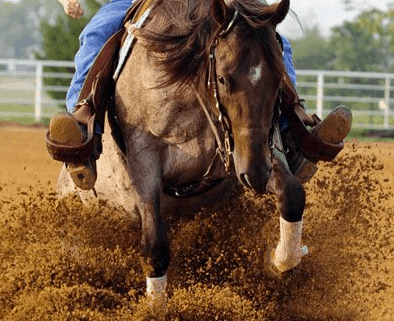
Reiners live and breathe to slide their horses every day. Have you ever wondered what it really looks like in slow motion? Have you looked beyond the length of the slide and flying dust to see what the horse is required to do? It happens so quick it can be difficult to see, until now.
The futurity event is the pinnacle of reining accomplishment as they take horses through a 2-year gruelling training program in pursuit of winning the covenanted prizes in Oklahoma City, USA as late 3yo’s. The Italian futurity and other futurities happening across the world.
When we saw that Russell Guire of Centaur Biomechanics had videotaped a reiner with his high-speed video camera, we knew it would show the real pressure and psychical strain these horses go through. There’s no doubt these horses get a workout in the biomechanics department.
This is one of those videos that you should watch once or twice, then go to full-screen mode and watch it while toggling the stop/play buttons. Watch the neck, the shoulder, the back and the hocks.
Some horses get high-level care, but many do not, and that does not mean they are going to be any better off. Watching the video makes it a little easier to understand why Adequan is one of the largest sponsors of the Futurity.
These relatively small horses are carrying a heavy saddle and rider, well above the accepted ratio of 20% of the horse’s body weight. And then asked to turn inside out to slide and stop.
Look at the tailbone and see how much work it does in balancing and helping the horse achieve the sliding stop. Regrettably, most tails are blocked to avoid penalty scores these days, creating even a great physical detriment to the horse during the slide.
Many trainers are asking young horses, just 2-year-olds (some started under saddle even earlier), to start sliding within 90 days of being under saddle, and some by 6 months, are boasting about the length of the slide. No wonder so many break down or are running on drugs to enable them to get shown or even stay in training.
I’m sure everyone who watches Russell’s video will see something different.
But maybe after watching it, you will notice more than you did before the next time you watch a reining horse slide, and maybe you’ll look at some different parts of the horse and consider what they are really asking this horse to do.
If you care for the Welfare of Horses please vote on our poll now for change now. Now Closed.
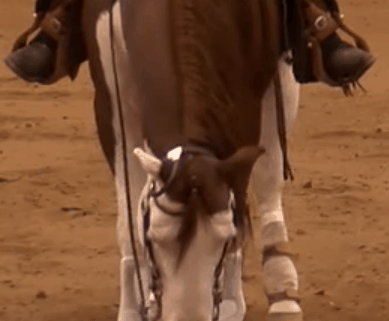
Intimidation or Not? You be the judge of these two videos. A horse dropping its head to the ground at every stop? A shake of the reins and the horse is eating dirt. To perform the next manouevre, the horse must lift his head at least 2 feet higher so why have its head all the way down there?
At a recent judge’s seminar one of our team attended, judges and applicants were advised not to give credit to horses that dropped their heads to the ground as it showed intimidation. The lead judge’s instructor was saying ‘a horse carrying its head unnaturally low, dropping its head lower with every shake of the rein – is not the look we want for reiners. They look intimidated and probably are.’
You be the judge of poor Titan the deaf horse owned by the outspoken Clinton Anderson. The horse he likes because he is a dumb horse.
2018 Cactus Reining Classic Open Derby Winner Scoring 234 (78)
Co reserve Champion level 4 Italian Derby Scored a 225 (75)
Can’t see the video – go to: https://www.facebook.com/cirabaeckreininghorses/videos/234817333940701/
What is intimidation training?
Intimidation training, which is repeated punishment, is the primary way most horse trainers get their horses to perform. They jerk, jerk, jerk on the reins or spur, spur, spur until the horse complies out of fear and force. Of course, a horse that is deaf is already at a set back of submission; basically, the animal is disabled and categorized that way if he were a human.
This method works for those who demand short-term results; just long enough to win a class.
Intimidation is teaching a horse helplessness. A horse drops its head to the ground when it’s being dominated in the wild and when being ridden. Reiners want their horses helpless and entirely reliant on them for every move. Another good reason to have a deaf and dumb horse some might say.
Intimidation training works so well that a great many of the most successful trainers seldom use any other form of behavior modification. It becomes the ‘way of training’ as the majority of professionals use intimidation, and the majority of horse owners who are not professionals adopt the same methods of “intimidation” as their training practice to get a horse to perform. Stand in the warm-up pen, and the fact cannot be denied unless your drowning in their Kool-Aid. It’s Monkey see-Monkey do.
With most of the judges and “influencers” of reining policy also being trainers or are “invested” in the showing of reining horses, intimation is accepted. No one will stand aside and enforce fair change for the horses as it could mean the end of an industry with so many operating with intimidation. Instead, the policy makers concern is increasing the revenue and prize money to feed the intimidation trainers and those invested in the industry.
The proof is that intimidation trainers are continually intimidating their horses. You can observe it during at-home training sessions, during the warm-up at shows, just before entering the show pen for a performance class and even after exiting the show pen. They even post videos of it now as the standard practice for training a horse.
When a person wins in the ring, Money see-Monkey do goes into overdrive. How many horses now will be victimized to drop their heads to the ground when at a standstill?
It’s never-ending because it is never permanent. You often see a horse that performed in the pen, under new stewardship start to fall apart. Less intimidation is applied and the perceived training starts to unravel. Intimidation training does not teach a horse the correct response to a request that will be long-lasting; it only instils fear and helplessness. The horse merely performs out of an effort to avoid pain.
Intimidation trainers don’t use positive or negative reinforcers; they quickly opt to negative as the horse shows a sign of non-compliance. They immediately begin more intimidation—severe bits, tying heads up in stalls, refusing to let horses lie down to rest, excessive flexing without relief. Relief is not just letting the rein go, its letting the horse carry its head naturally for a period of time to relax all the muscles.
There are those unique horses that can tolerate the intimidation and can win classes…some even become champions. But, of course, most intimidated horses don’t perform well consistently. They get so nervous, and fearful, that they can’t manage a smooth and graceful performance; instead, they get through it with pinned ears, swishing tails (unless tail blocked), sweaty necks, and heads carried as low as their knees or lower.
Judges aren’t going to disqualify professional horsemen since they feed the NRHA money machine. They may have to show under them also at a later date. They are not going to score them down due to the fear of retribution when they are being scored. The judge’s seminar is seemingly an ideological session that no one is forced to comply with.
NRHA Directors and Show management are the only people who can set aside those who succeed using intimidation training. Disciplining the worst to set a standard for all others.
It is just plain stupid to think competitors are going to discipline themselves or their trainers….why would they? The consequences are intimidating!
We sat and listened to a high profile NRHA judge & former western sport board member at a judging seminar states “only old women are really concerned about animal welfare”. Probably the most honest and discriminatory statement made when you see most abusers charged are men. But does it reflect the priorities of NRHA or just the opinion of a rambling old fool?
What we do know is there is no place on earth for that mentality toward any breed of horse (or animal). God help the horses.
Some high profile horse owners and breeders have also been battling hard to protect the horses, the AQHA 2015 Protect Them Coalition.
As one of the highest profile women in quarter horse, Carol Harris and Kathi Hansen lead a group of 20 women to change the welfare of the quarter horse.
This applies to any quarter horses in general and those horses that compete at shows. The NRHA is not excluded from being considered in these remarks.
“We who love Quarter Horses have allowed too many inhumane trainers to become judges who continually reward each other when they judge or show in our competitions.
These trainer/judges have been permitted by our Association to badly hurt our favorite sport by participating in conflicts of interest positions at our Quarter Horse shows and by refusing to listen to valuable advice and criticism that have been given to them for years.
If our leadership and our members do not know the difference between right and wrong, they should try to remember that there is “NO RIGHT WAY TO DO ALL THE WRONG THINGS THEY ARE DOING”. That is exactly what they have been continuing to force on our horses, our membership and our Association for countless years. They never seem to think it is necessary to improve or correct the continual mistakes.”
Carol Haris of AQHA 2015 Protect Them Coalition writes: This email was sent to me a couple days ago by two Quarter Horse lovers, Betty Marshall and Liz Hickling. For some reason, it made me ashamed that I was not helping them like I used to try to, but a year and a half ago I was more or less asked not to write any more “On The Fence” articles because it disturbed the halter horse people too much. No telling who I will disturb this time, but the fact that people who don’t know the difference between right and wrong are still bothering me and should be bothering others the same way.
To read the rest of the article from AQHA 2015 Protect Them Coalition
https://reiningtrainers.com/wp-content/uploads/2017/09/Horse-Eye.jpg570855Animal Welfarehttp://reiningtrainers.com/wp-content/uploads/2016/06/RT-LOGO2sml-300x174.pngAnimal Welfare2017-09-27 20:14:052022-05-16 20:35:31Only Old Women Care About Horse Welfare?
Professional Reining Horse trainer takes action against the NRHA after being suspended for abuse.
This is a story that just keeps on giving. It starts as horse abuse protests and allegations, owners pulling horses and end up with the trainer saying he is unfairly treated and should be compensated. What about the horse Mr Reining Trainer should he be compensated for being in your barn?
It all starts with this:
Imagine seeing your horse in a stall at a reining show. At first, it may seem normal and then you realize, your horse breaks out in a sweat and becomes distressed after being hung high for punishment for hours. Is this unusual for reining training?
The world is abuzz with the story of a reining horse who suffered the torturous treatment of being hung, while at NRBC (National Reining Breeders Classic) annual show in April 2017. One of the largest shows on the NRHA circuit.
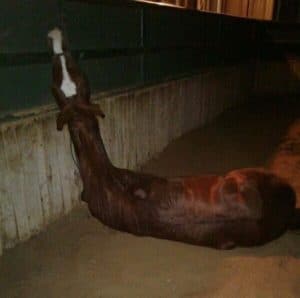
To assist you to understand how it can all turn out for the horse, the image below is a recent snap taken at western trainer C. T. Bryant’s barn displaying what a horse can suffer when it gets hung and loses its footing after attempting to get free. Now back to the reining professional busted.
The sound of a thrashing horse could be heard across the facility. The thrashing noise was unbearable to listen to and many thought at first it was a cast horse. People talk about seeing others racing to where all the sound was coming from, ending up at a stall covered in curtains blocking any view inside. The curtains were pulled aside, and there is a horse that has been tied high now in deep distress and potentially could permanently harm or kill itself trying to get loose.
The allegations are the colt was hung by a Top 20 NRHA Professional trainer, but no one wants to speak of his name as he is one of the worshipped Top 20. It’s all hush hush unless you are in the inner circle, until now after his name has been finally published.
Questions are being asked “If this is what he does at a show, imagine what he does back home in the barn?”
Reining trainers, like some others, are renowned for tying horses with their head and neck up to an awkward level; leaving the horse to appear to be on its tiptoes. A mindless method used by many reining trainers to punish horses in an attempt to tame those that show any sign of resistance to their dominant training regimes that demand the control of every move the horse makes. Some horses are tied like this, away from food and water, all night. In severe cases, the horses will be left like this for 23+ hours. Some hang them on high walls, others from rafters in stalls and arenas. It is the secret that no-one in the inner circle talks about.
The suffering horses pull against the restraint, half-rearing and shuffling their feet, trying to ease their pain and suffering. The muscle cramps and tearing of muscles and ligaments are relentless on them. All the horse wants to do is drop its head down to relax the muscles. These horses are bred to have a low head carriage hung well outside their bearable comfort zone even for a few minutes.
Attempting to escape, the horse can lose its footing and then they are in serious trouble. Others just quit and submit to the helplessness in agony and silent distress. To move around can mean breaking their neck, others kill themselves with a severe hit to the poll while reefing on the tie-up. They can break legs, and hips and even smash teeth with the halter pulled through their mouth.
Some clandestine trainers and their bamboozled owners call it a necessary part of training. Most enlightened people call it abuse. The horse would call it hell.
Unlike the horse in the photo, not all horses reached the point of complete exhaustion and hang themselves, but many suffer severe muscle pain and muscle tearing and are expected to work as performance horses the next day. The trainer is believing they have dominated the horse sufficiently that it will do what is demanded of it instantly to avoid another tie-up session or further pain inflicted.
Most trainers using this technique also have a bag full of other torturous methods they apply to dominate the horse to the point of learned helplessness. Submissive and robotic fulfilling the trainers’ aim for a winning ride.
This clandestine trainer thinking occurs when the desire to win–or otherwise achieve training goals, overcomes the humane treatment of the horse. When they run out of intelligence and patience and their repressed anger takes over. The trainers in some cases resent the horse will not do as it is told and become aggressive toward the animal. As the futurity season is well underway, horses are exposed to bizarre and oppressive training practices to force the final performance in the hope of winning.
The horse’s owner has pulled all her horses from the Top 20 NRHA Professional barn and moved them to other locations. It is unknown if a protest has been filed as the NRHA lives in a world of secrecy when it comes to complaints and how they are handled.
What has the NRHA done about the incident and what standard did they set? What did the stewards on the day do about this incident?
It has been a long wait. On a review of the disciplinary list for May 2017 through August 2017, the reining professional busted has not been mentioned. The September list was not published even though referenced in the index. However, the NRHA is renowned for not releasing all suspensions and revoked memberships. It often seems that just the occasional one makes it to the list; the ones that they cannot keep undercover.
Update: In the October 2017 disciplinary list, an alleged trainer, Arno Honstetter is finally published with just a minor three-month suspension. Did they charge him for hanging a horse or was this for another offense, as it has taken so long to appear on the list?
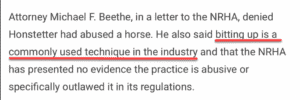
Well, the lawsuit that follows shows us that Honstetter is actually reported for another incident in January 2017 by Leading AQHA Horsewoman and NRHA Trainer, Karen McCuistion. A person who is competent in defining abuse of horses. It is alleged that he was caught bitting up/checking a horse in the barn at a show. The same practice that killed Bella Gunnabe Gifted at the hands of Mark Arballo – who was banned for life, only after the courts found him guilty of abuse. Read the full article here.
Honstetter denies the abuse and believes he did not get a fair process in how the NRHA handled the protest so he wants it overturned and a payment of $100,000 for his suffering. If only the reining horses could get as good a legal representation as trainers!
No longer is the matter about horse abuse – its all about the trainer being treated unfairly – the culture of reining shining through.
Arno Honstetter continues to market himself as a NRHA Professional which again questions the value of the NRHA Professional program. His lawyer has advised that Biting up horses is a standard practice in NRHA – so all reiners are being abused?
The National Cutting Horse Association (NCHA) has a zero-tolerance policy on horse abuse, and recently immediately (within days) suspended a well-known high profile trainer for abuse of a horse at a show, even though the SPCA laid no charges. AQHA is reported to have a life ban on bitting up horses.
https://reiningtrainers.com/wp-content/uploads/2017/09/Horse-tied-high-in-barn.jpg715472Animal Welfarehttp://reiningtrainers.com/wp-content/uploads/2016/06/RT-LOGO2sml-300x174.pngAnimal Welfare2017-09-10 11:47:492025-01-09 23:21:58Top 20 NRHA Reining Professional Busted for Horse Abuse at Show






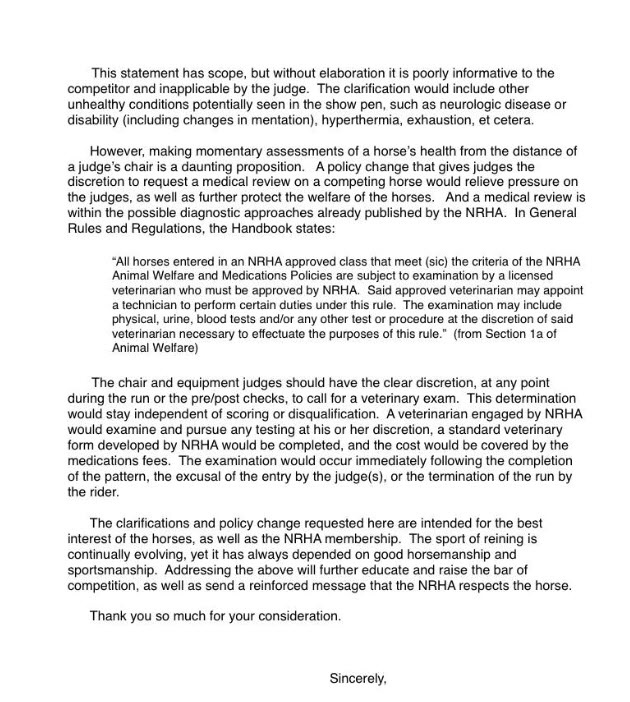
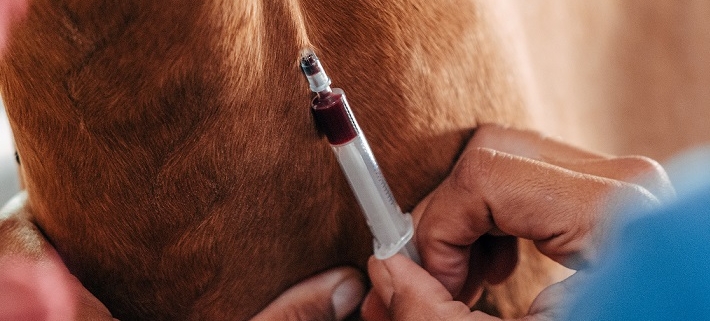
 Acepromazine (“Ace”), chlorpromazine and fluphenazine are known as phenothiazine-type tranquilizers. Although they don’t contain phenothiazine, these drugs are classified as such because of their related molecular structure. Acepromazine is the most commonly used phenothiazine tranquilizer in the horse industry.
 In humans, fluphenazine is used to treat schizophrenia and acute bipolar disorders. In veterinary medicine, it’s used for horses stall-bound due to injury and to take the edge off nervous horses. In some instances, it’s recommended for extremely excitable horses with chronic tying-up disorders.
 What remains unknown is the long-term effects on a horse’s physical and mental wellbeing afterwards, and just how much of a competitive edge they provide.
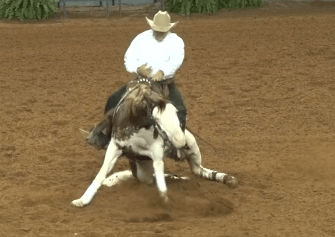

 The sound of a thrashing horse could be heard across the facility. The thrashing noise was unbearable to listen to and many thought at first it was a cast horse. People talk about seeing others racing to where all the sound was coming from, ending up at a stall covered in curtains blocking any view inside. The curtains were pulled aside, and there is a horse that has been tied high now in deep distress and potentially could permanently harm or kill itself trying to get loose.